
A gym mirror is more than a reflective surface — it is a training tool. Whether you run a commercial fitness studio, a boutique yoga space, or a home garage gym, the right mirror helps members check form, improves perceived space, and elevates the professional look of your facility.
Gym Mirror Benefits for Commercial and Home Training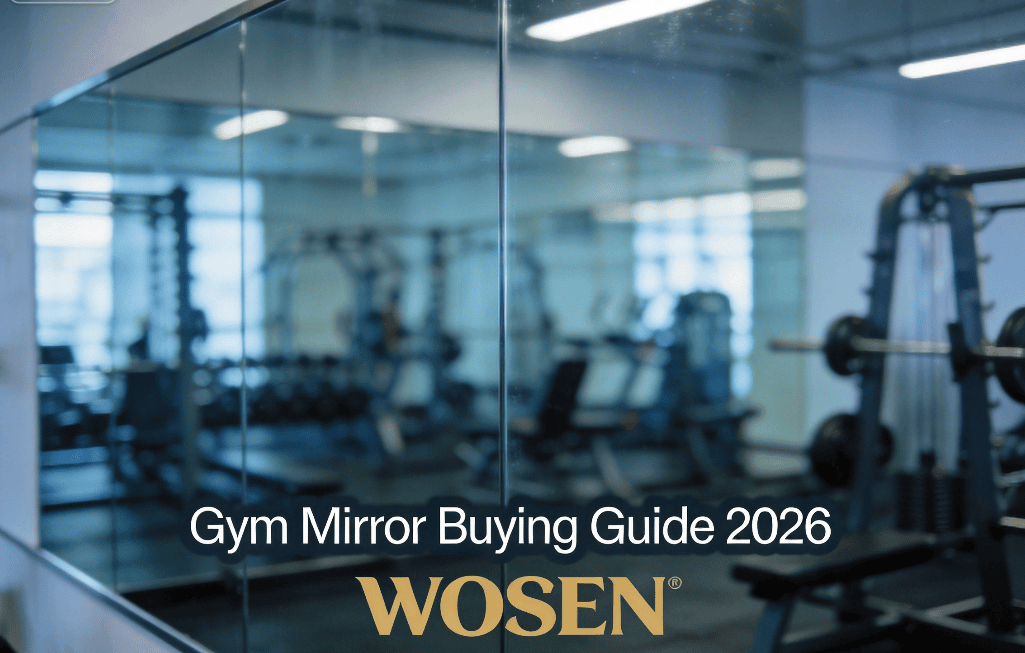
Coaches and members use wall mirrors to verify posture, depth, and alignment in real time. In commercial gyms, floor-to-ceiling mirrors also make small rooms feel larger and brighter. For home gym owners, a single full-length panel turns a spare wall into a functional training zone.
Key Specs to Check Before You Buy
Safety film (shatterproof backing): This is non-negotiable. A gym mirror should use tempered glass with a safety backing film that holds fragments together if the glass is ever impacted. Standard mirror without film is a liability in any training environment.
Thickness: 4mm–6mm tempered glass is the commercial standard. Thicker glass resists warping on large wall panels and survives humidity better in sweat-heavy rooms.
Size and layout: Common commercial panels are 1830mm × 2440mm (6ft × 8ft) or 1524mm × 2134mm (5ft × 7ft). For home gyms, a 1220mm × 1830mm (4ft × 6ft) panel is usually enough. Plan mirror coverage to span the main lifting or cardio wall.
Edge and frame: Beveled or polished edges look cleaner and reduce chipping. Frameless designs give a seamless studio look; aluminum-framed panels add durability in high-traffic areas.
Installation surface: Mirrors mount best on flat drywall, concrete, or tile with heavy-duty mirror clips and adhesive. Uneven or crumbling walls need backing boards first.
Gym Mirror for Different Spaces
Commercial fitness studios: Use wall-to-wall tempered panels with safety film, 5mm+ glass, and a clean frameless edge. Bulk orders should request uniform batches to avoid color or thickness variation.
Home garage gyms: A 4ft × 6ft or 5ft × 7ft panel with safety backing is enough. Many buyers mount two or three panels side by side to cover a full wall.
Yoga and Pilates: Brighter, distortion-free mirrors help instructors demo movements. Anti-fog is not required, but a smooth, polished edge improves safety.
Bulk Buying and Customization
Common Installation Mistakes to Avoid
Many gym owners mount mirrors too high, too low, or on uneven walls. The ideal mirror height places the top edge at least 2000mm from the floor so tall users can see their full reflection. Leave a 10–20mm gap between panels for thermal expansion and to prevent pressure cracking. Never use standard construction adhesive alone — mirror-specific adhesive plus mechanical clips are the safe combination.
If your wall is concrete, use masonry anchors. If it is drywall, mount into studs or use heavy-duty toggle bolts. Gypsum board alone will not hold a 6ft × 8ft mirror panel over time.
Maintenance and Cleaning Tips
Clean gym mirrors at least once a week using a microfiber cloth and a mild glass cleaner. Avoid abrasive powders or ammonia-heavy formulas that can damage mirror backing. In high-sweat environments, wipe edges dry after cleaning to prevent silver corrosion and black spots.
Wholesale Pricing Factors
Price depends on glass thickness, safety film, edge finish, frame type, and order quantity. Frameless 4mm panels are the most cost-effective for bulk container orders. Adding custom laser logos, individual retail packaging, or anti-shatter certification will raise the unit cost but also increases resale value.
Customization Options from WOSEN
WOSEN supports custom sizes, frame colors, logo engraving, individual cartons, and pallet packaging for gym mirror wholesalers and fitness chain projects. Contact our sales team for a detailed quotation based on your target quantity and destination country.
looking for a certified gym mirror supplier? Contact WOSEN for OEM/ODM quotes, custom sizes, and bulk pricing at https://www.wosenmirror.com/contact/

